

Build your AneeMate home: camps, farms and crafting
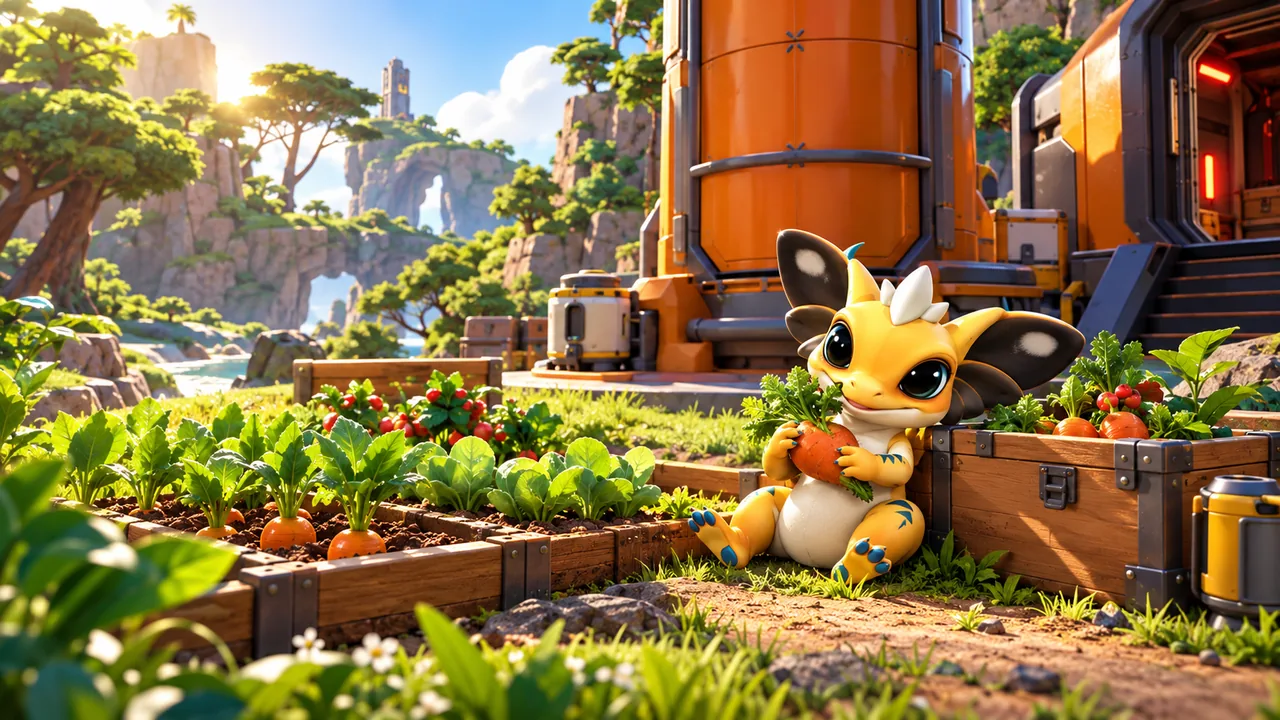
Building in AneeMate gives exploration a home to return to. The official guide connects a first camp with safe storage, creature housing, farms and crafting. Materials gathered on the island become useful structures, while AneeMates can contribute to food production. The result is a home loop that supports the catching adventure.
This is a guide to the systems described on the official gameplay page, reviewed on 19 October 2026. It does not promise a future construction feature, a player-run property market or anything that has not been documented. Early Access behaviour can change between builds.
Start with a working camp before a spectacular house
Your first camp is described as free and becomes your home. The guide points new players toward a suitable flat location and the builder. The default keyboard key B opens building mode, with the first camp ready before a home has been placed.
A first camp solves a practical problem. It creates a location you can recognise, return to and organise around. Before thinking about a dramatic layout, make sure you know where the storage is and how you will approach it after an expedition. A modest camp that you understand can be more useful than a larger build you cannot navigate.
This is suggested organisation, not a requirement imposed by the game. Players can choose different priorities. Someone interested in construction might immediately experiment with pieces, while a collector may want only the essentials before returning to the island.
The important point is that building supports the adventure. It does not need to become a separate obligation before the player is allowed to enjoy catching creatures.
Learn the builder through a small experiment
The gameplay guide documents placing and rotating pieces, opening the building menu and using a remove mode. Walls and floors sit alongside functional structures such as farms. Those tools provide the basis for learning through a small, reversible layout.
Try one piece, check its orientation and see how it relates to the camp. Leave enough space to reach the structures you use. These are general planning suggestions, not claims about snapping distances or construction limits. If a control differs in your build, use the settings and prompts shown by the game.
Timber and stone connect construction to exploration. The guide describes gathering with the staff, so a trip outside the camp can serve more than one purpose. You may come back with a creature, materials and a better understanding of the route.
That relationship is part of what makes a home feel earned. It grows from things you do in the world instead of existing only as a decorative screen separate from the game.
Storage changes how you plan an expedition
The official guide distinguishes items kept at home from items carried in the bag. It describes home storage as safe when you faint, while carried items can be left behind. New catches waiting inside Yipees also need attention before an expedition goes wrong.
A useful habit is to decide what must come home before you take another risk. If you have gathered materials for a structure or caught something you particularly wanted, returning can be progress rather than an interruption. The game's home systems give that choice a purpose.
This does not mean every player needs a rigid inventory routine. It means learning which items are protected and which are exposed. Clear information about consequences makes an exploration decision more interesting than discovering the rule only after a loss.
The catching and exploration guide explains how party space and returning home connect to a first session. Read the two loops together rather than treating construction and catching as unrelated activities.
Farms give creatures another role
AneeMate's guide describes farms that need an AneeMate assigned to them. A crop produces a harvest while you explore, and the harvest basket needs to be collected. When it is full, growing pauses. That gives farming an understandable rhythm rather than asking the player to stare at a timer.
The documented system also matches workers and crop elements. Choosing a suitable AneeMate can improve the harvest. The relevant question becomes whether a creature should travel with you, rest at home or work on a farm. A collection can be useful in several ways without every creature needing to fill the same combat role.
For a new player, one working farm is enough to understand the system. Learn how to choose a crop, assign a worker and collect the basket before expanding. That is an example of manageable learning, not a claim that the game limits you to a particular starting layout.
Farm upgrades use MATE according to the guide. This keeps the ordinary production loop connected to the currency earned by playing rather than requiring a wallet transaction for every improvement.
Food connects the home to creature development
Food matters because the guide connects feeding to AneeMate experience and healing. Meals and elemental preferences give farming a reason to exist beyond filling storage. A harvest can support the party you want to take on your next trip.
That relationship gives the builder a different role from a purely decorative housing system. A useful farm, a place for creatures to live and a clearer camp layout can improve preparation. Players interested in collecting can therefore have a reason to build even if architecture is not their favourite activity.
The system also creates choices about attention. You might focus on a particular creature's development, diversify your crops or first improve the flow between storage and work areas. These are possible player approaches, not additional mechanics promised by the studio.
The MateBook is the reference for individual creatures. The guide inside the current build should remain the reference for feeding and progression requirements as those systems evolve.
Crafting turns finds into a plan
The current gameplay page describes recipe cards and specialist stations. Cooking, component production, orbs, equipment and other outputs have different stations. A recipe requires both the relevant ingredients and the card, so finding materials is only one part of preparation.
The interesting design connection is between the next thing you want to make and the next journey you choose. Instead of gathering every resource without a reason, you can inspect a recipe and identify what is missing. That gives a shorter session a concrete objective.
A good first crafting target is something you can understand and use. You do not need to plan the entire progression path before making a first useful item. Check the station and card information, bring what is needed and observe what the craft consumes.
Nothing in this guide implies a transferable crafting economy, creator royalties or selling homemade structures to other players. Those would be separate features requiring their own confirmed rules.
A home can change as your priorities change
The official guide describes moving home and using Home Portals. Those are useful systems to investigate once you know the island better. A location that made sense early on may not serve the activities you enjoy later.
Before moving, check what the current interface says will happen to your camp, storage and structures. This article does not invent refund values, relocation costs or persistence guarantees beyond the published guide. The confirmation in your current build matters more than assumptions from another survival game.
A changing home can also make a development journey visible. A first camp might be simple. A later version can express a player's preferred routes, favourite creatures and practical needs. Sharing that change is a natural creator topic because it shows actual gameplay choices.
Turn a home tour into useful creator content
The AneeMate creator programme lists garden tours among its example content ideas. A useful tour can explain why you placed things where you did, show the first farm working and give another player a practical starting point.
The programme describes reviewed submissions and in-game rewards. It is not a guarantee that every video is approved or that a camp tour produces cash income. Follow its disclosure and content rules, especially when a post is made as part of the programme.
For visual storytelling, the documented photo mode gives you a way to frame the camp. A clear before-and-after image can show your progress without implying that a render is footage of an available build.
Common building questions
Do I need $QORPO to start a camp or farm?
The guide describes the first camp as free, farming as a progression feature and farm upgrades as MATE spending. The optional token economy is separate. Check the current interface for any particular item you want to obtain.
Can I sell the house I build?
This article does not establish a house-trading feature. The published player market concerns eligible minted AneeMates, and its page was marked Opening soon at review. Building a camp does not automatically make it an on-chain property.
Where should I begin?
Play AneeMate, place the first camp and learn storage. Then try a farm and one useful recipe. Return to the official guide for the system you need, instead of turning your first session into a construction checklist.